While navigating the house of technology you build for yourself, please hold onto banisters and sturdy bits of furniture because the rug may be pulled out from beneath you at any time.
Software companies have a silly habit of doing one or both of the following:
Taking a one-time payment to access their premium version forever.
Giving away a free version of their product forever.
The former exists to both gather capital (I presume) and ensnare people who are anti-subscription and have an outdated or incorrect understanding of software. The latter is solely designed to convert free users to paying customers.
Here’s the thing: these same companies have another silly habit where they conveniently forget their marketing promise and request more money, or hoover some up with advertisements. They’re making a bet that enough users will convert to a subscription (or swallow the ads) compared to the number they alienate by this move, that they come out ahead. When it’s a service with few alternatives and all with similar business models, it’s difficult to hold any of them accountable.
Not every company that has made these promises has proceeded to pull out the proverbial rug. There are at least a couple in each category that have remained steadfast, and those are just as intriguing to consider. Here’s a survey of the software and services I’ve used that have explicitly offered me forever at the cost of free or some fee, and where they are now.
iA Writer
Let’s kick off with a positive example that clarifies the nature of purchasing software. iA deserves that much as a focused company producing well-designed and wonderfully eccentric products. They present and discuss design in a way I can understand, but I do not at all understand their business model.
iA sells three products. Writer and Presenter are both minimalist markdown-focused apps that run on Apple platforms,1 the former designed around traditional writing and blogging, the latter on crafting slideshows. Their third product is, naturally, a wild notebook.
iA offers a license purchase option for their products, typically requiring individual purchases for each platform, with an FAQ clarification that a purchase is not the same as lifetime updates. Purposely vague around the concept of a “major” update—they aren’t Adobe in the early 2000s—you decide at the moment whether you want this tool in your life. If you buy it, it’s yours for as long as you can keep it running.
The timeline for updates is uncertain. iA Writer experienced nearly a decade of free updates, so you might get lucky—or not.
There’s no rug here. It’s precisely what they say, loosey-goosey as it is. And if you’re into their Presenter product, they also offer a subscription. Heck, they’re even dipping their toes into the enterprise world. It’s a safe bet that companies are more interested in slideshows than Markdown documents.
Regardless, even though I don’t use iA Writer often anymore, and I only used iA Presenter during a beta period, this company holds an outsized place in my heart for caring tremendously about their product and doing right by the people who understand and agree with their stance.
Affinity by Serif (Canva)
You were the chosen one! all the design enthusiasts cried last month when the Affinity suite of apps was consolidated into a single product that, yes, was released as free forever!
No asterisks!
No gimmicks!
Everyone who adopted any of the Affinity apps, myself included, will keep one eye to the sky for several months as we await that other shoe. It’s jarring to fall in love with a successful outfit that’s taking it to the man (Adobe) with an equivalent business model to iA that also mirrors the old business model of their foe—buy a major version of their software that will last you several years—and see them acquired by the freemium web design tool Canva to end up here, pulling a reverse rug-pull by going from paid to free.
Here’s the issue. The Affinity suite (now just Affinity, no individual apps) will now solely act as a funnel to Canva. Without any revenue of its own, this product is only valuable to Canva insofar as it can drive users to a paid subscription—you know that thing every Affinity user was trying to avoid. Since nobody is directly paying for Affinity, Canva owes those users nothing.
And this is the crux of the issue with all freemium software tools: there is no transaction, and the free users are at the mercy of the company’s whims. If too many free users fail to convert to paid accounts, some features have to go behind a paywall. Them’s the breaks.
Some people will likely hoard their Affinity 2 apps for several years and hope that no Apple software updates cause breaking changes. Others—like me—will switch to this new Affinity (singular) app and hope for the best for as long as possible. Maybe Canva will just forget this quirky little design community that likes having actual software installed instead of running it in a browser? Unlikely, but dreamers will dream.
Notability
I first bought an iPad in my junior year of college. Since Apple had not made their Notes app a reasonable option yet, tablet-wielding students across the world chose between Notability and Good Notes. Because I knew more people who used Notability, including a few lecturers with iPads, that’s where I settled. I paid around twenty or thirty dollars for a one-time purchase that promised lifetime access, and never regretted it.
To their credit, kind of, Notability has never threatened to reduce which features they offer to us original buyers. I continue to have my templates, my customized favorite writing tools, and all my notes categorized in their various colored sections. I sync everything to Dropbox. However, given I only use Notability sporadically now, I’ve slowly watched the cracks widen to reveal a gorge that can only be filled by that sweet, sweet subscription money.

It’s not too bad, really. The focus in their Notability Pro subscription is recording transcription, smart notes, summaries, quizzes, flashcards, and other whizzy features powered by AI models. They still clarify in the settings that I maintain access to my Notability Classic plan:
Access to the core Notability experience, including unlimited notes and premium content previously purchased in the app.
Notability has walked this line rather well. Kudos to them.
Pocket Casts
After a brief stint with a 6th-generation iPod Nano in high school—an oft-maligned model, but the only one I ever had, and thus my favorite—my only podcast interactions have been via Pocket Casts. I first downloaded it during my sophomore year of college on my Galaxy S4, and recently eclipsed 300 days of listening time in the app. At the time, it was a paid app that had a one-time fee for lifetime access to premium features.
Pocket Casts has bounced around since then and faced some controversy with how they eventually rolled out their premium subscription, Pocket Casts Plus. They were purchased by a conglomeration of radio organizations in 2018, then were acquired by Automattic—the company behind the for-profit branch of WordPress—in 2021.
Prior to that final acquisition, they launched their subscription pricing. In an effort to get out in front of any possible controversy, they announced us original users would receive three years of said subscription at no cost. The internet didn’t take kindly to that suggestion, so they backtracked. I now have this lovely Pocket Casts Champion badge on my account page and continued access to all the main features.2
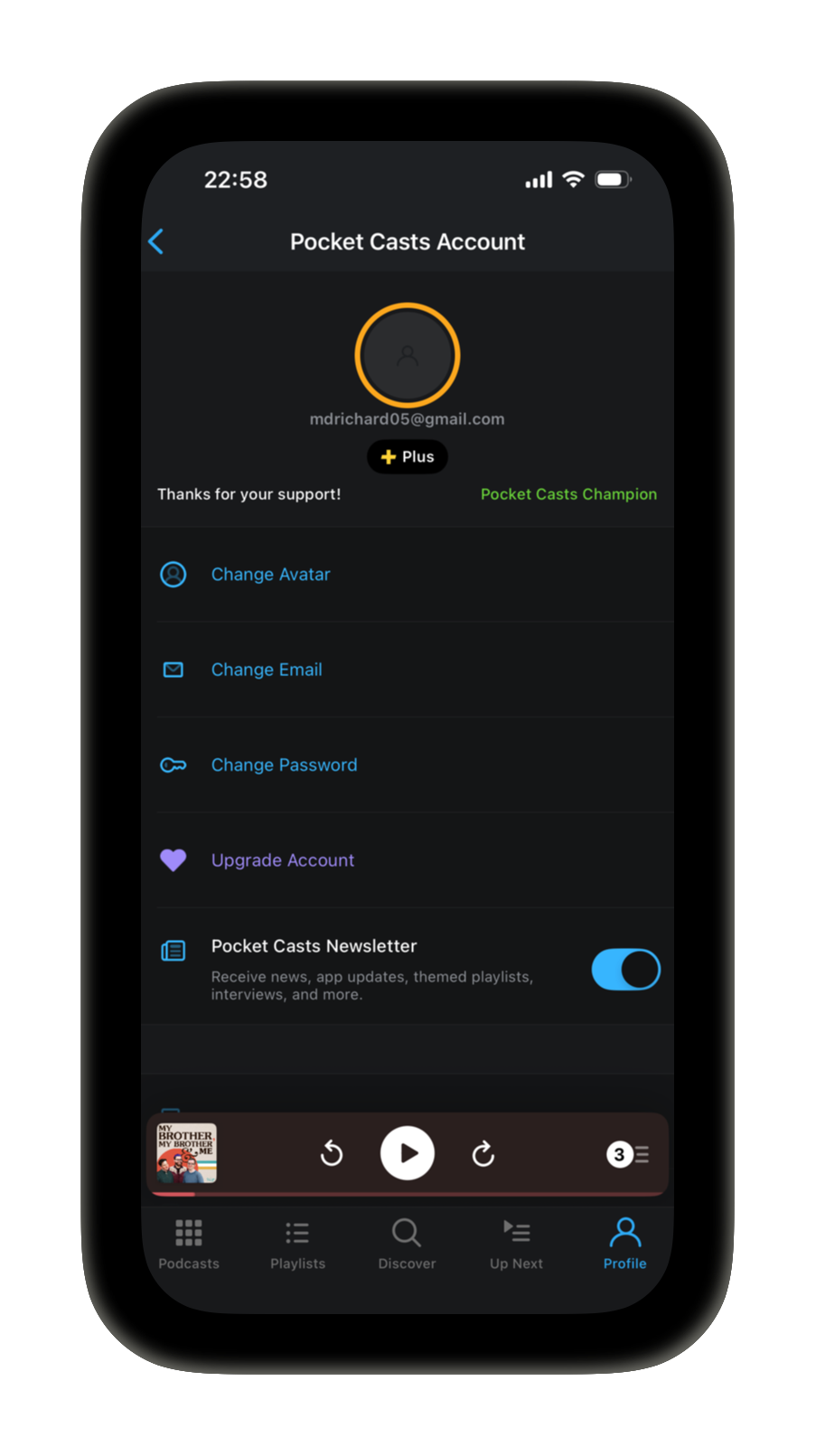
Some Champions reported seeing ads in Pocket Casts earlier this fall, so clearly not everyone has had as stellar a time using this app as me. But, on balance, they largely corrected an initial misstep and I appreciate that. It still makes one wary of how little control we have in these situations, and we’re lucky that whoever was in charge was capable of feeling some level of shame (or lost revenue from a vocal group bad-mouthing their product) after announcing their plan to walk back earlier promises of forever.
Fitbod
I received this email around Thanksgiving.
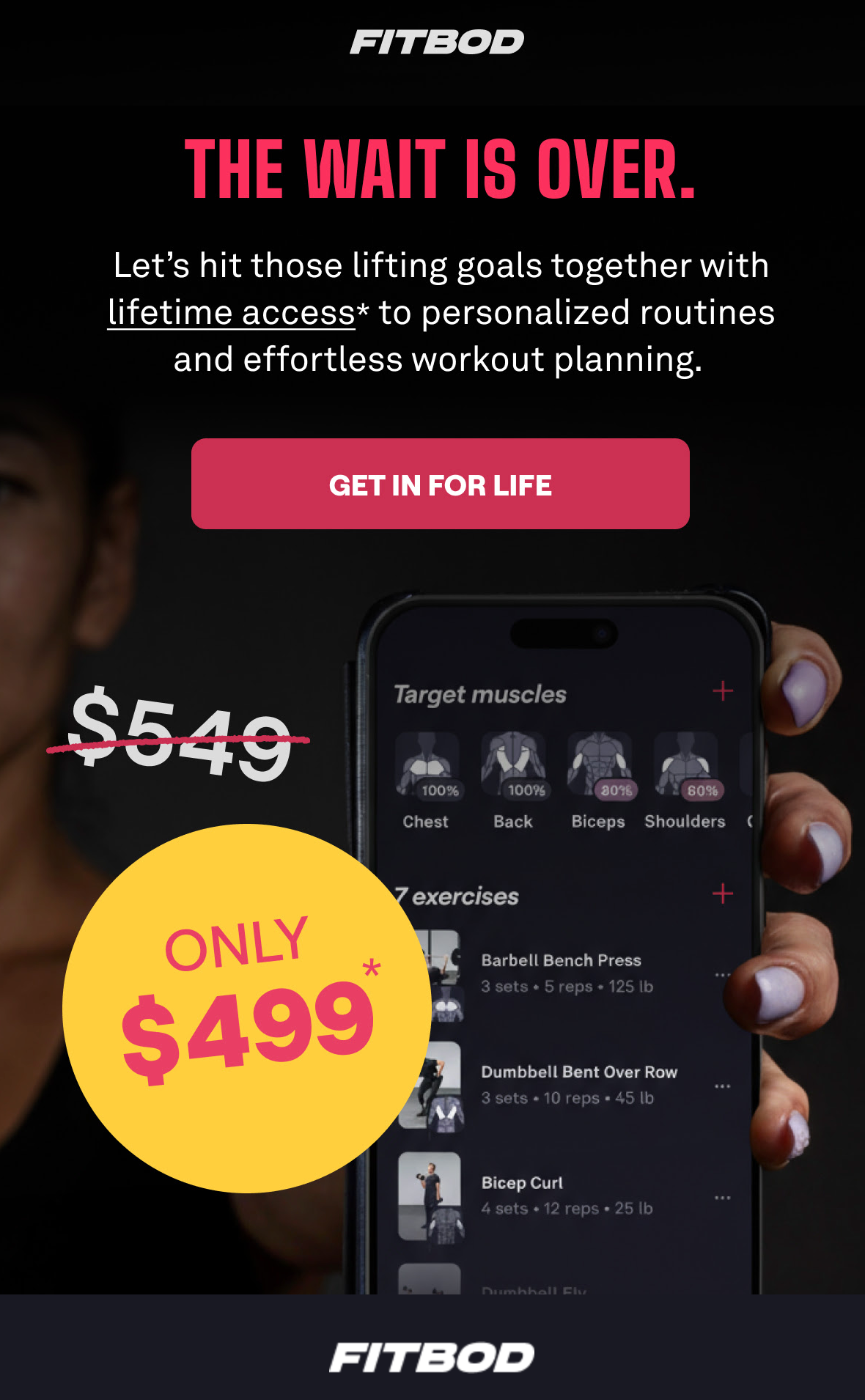
It’s so weird. There are only a thousand spots. This company is well-established with its recurring subscription model. What could lead them to run a lifetime unlock promotion? I have two plausible reasons:
Why not? An annual subscription is $80, so this is the equivalent of more than six years of service at that price. If some super-users are dedicated and think it’s worth it to them, cool.
A cofounder has run into some trouble and needs half a million dollars, stat.
Their footnote augmenting their promise of forever is well-written, though. I appreciate that they stand by the promise, committing harder than iA, but acknowledge the reality of software and give themselves just enough wiggle room at the end.
A lifetime membership provides ongoing access to the current version of Fitbod and any standard updates released for the duration of the product’s commercially supported lifetime. While Fitbod anticipates that the Fitbod product you purchased and associated services will remain available and supported, potentially for many years to come, Fitbod reserves the right to modify or discontinue app features, content, or services at any time.
Considering they followed up two days later with other messaging in emails and the app, it doesn’t appear these lifetime memberships were selling like hotcakes. I also bet there were more than one thousand available.
Notion
We’re finally in the world of free forever tools that began that way, unlike our poor friends who develop Affinity.
In my sphere, Notion is the standard-bearer of highly funded companies yet to turn a profit that boldly proclaim the value of their free tier. And, over several years, I’m surprised by how well they’ve stuck to their promise.
I dabbled with Notion early on before moving on to other methods of storing notes and organizing thoughts, but they continue to support my original system for tracking which books I’ve read.
Notion is ideally positioned to offer a free lifetime personal account. They have made significant strides in offering team and enterprise features, so anyone likely to use a free account entirely on their own—with a limited file upload—will not generate enough data to move beyond a rounding error in their server costs. You essentially get unlimited use of their native features, but are limited in your ability to connect to other people or services.
It’s a well-designed free tier that appears sustainable. Let’s hope so for the sake of all us freeloaders.
Todoist
I pay for Todoist and remain totally happy doing so. But their free tier is quite good for anyone who wants a better-designed app than the native Reminders app on their iPhone, or needs something cross-platform and available on the web. They do great work. They’re more niche than Notion, but are clearly following a similar game plan: Run a sleek but usable free tier and hope it encourages people to slowly move up-market or bring the tool to their work.
In 2021, Todoist squeezed the free plan for the first time. However, I think it was well done. They did not make breaking changes that would force existing free users to lose all their data, and anecdotally, from some friends, Todoist is still a capable app within those free limits that reduce the number of distinct projects available. If you want a nice list of tasks and don’t care whether they’re differentiated into categories, go with the free plan!
In reviewing all these apps that I use and have paid for, except Notion, I’m pleasantly surprised with how I’ve come out the other end. Apps have mostly become services—heck, corporations want everything to be a service, but that’s a different story.
Here’s the takeaway. First, be skeptical of free forever bottom tiers, but don’t be afraid of giving them a shot. The more robust their paid offerings appear to be, the better for you.
Second, a one-time purchase for access forever will likely lead to disappointment or frustration. Don’t heed their promises, except insofar as you keep receipts to blast the company on the internet. Instead, treat it like the iA or Affinity “major version” pricing. You get access for as long as they decide that’s what the product is, and eventually, you may need to pay more.
Finally, don’t be precious about paying developers, particularly smaller or independent outfits that care about what they make. They’re putting in good work, and if you find value in what comes from that effort, the exchange of value should go both ways. That said, it’s okay to hold them accountable when that exchange gets out of whack.